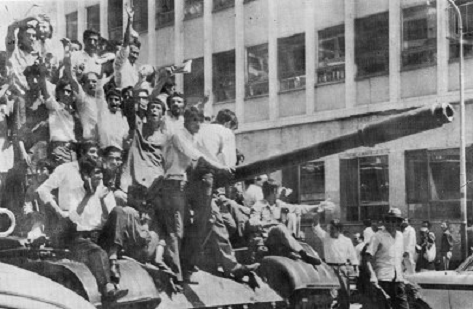
Surprise Attack! Revolution carried through by small conscious minorities

Surprise Attack! Revolution carried through by small conscious minorities
Kabul in the Republican Revolution of 1973

Wednesday, January 31, 2024

Appointment of new Niagara Police Chief Bill Fordy draws support and some criticism (The Pointer)

https://thepointer.com/article/2024-01-31/appointment-of-new-niagara-police-chief-bill-fordy-draws-support-and-some-criticism 


The Regional Municipality of Niagara Police Services Board has promoted from within, appointing Bill Fordy as the new Chief of Police for the Niagara Regional Police Service, the tenth Chief in the service’s 53 year history.  Fordy, who replaces retiring Chief Bryan MacCulloch, has served with the NRPS as Deputy Chief of Police since September 2017.

Jen Lawson, Chair of the Niagara PSB announced the hiring Monday morning: “[C]hief-Designate Fordy has a wide breadth and depth of experience in his 35-year-long career with the NRPS and RCMP (he was in charge of the national force’s Surrey, B.C. department and was later promoted). He has held key leadership positions within both policing agencies and prior to joining the NRPS as Deputy Chief, was the RCMP Assistant Commissioner overseeing all operational and administrative matters of policing in the Lower Mainland District (LMD) of British Columbia. He has overseen complex policing matters and substantial budgets at municipal, provincial, and federal levels.”

Chief-Designate Fordy’s budget experience will be tested, if the process to establish the force’s financial plan for 2024 is any example.

This past October, Niagara’s PSB approved a 7.1 percent increase to the service’s 2024 budget, amounting to a net budget expenditure of approximately $190.5 million. Included in the proposed budget was the hiring of an additional 40 staff members, including 20 frontline officers.

The proposed increase, which would have had a 2.8 percent impact on the Region’s overall budget, was too rich for Regional Council when they met the following month. Regional Chair Jim Bradley questioned some of the proposed new positions characterizing them as “more nice to haves, than essentially needed”.

Police budgets across Ontario, and Canada, have received heightened scrutiny over the past few years after decades of being rubber stamped in most cases, by elected local officials who often accepted the numbers presented by senior police brass as gospel.

Concerns around funding of police and what communities have received in return, to protect them and keep residents safe, have mounted in recent years. Canadian research has shown little correlation between investing in frontline police staff and a decrease in crime.

Questions have also been raised about how funds could be better spent, rather than unsustainable increases that largely go to salaries, overtime and benefits or additional staff. Funding partnerships that allow mental health professionals to work with frontline police officers and investments to address areas of crime that are rapidly growing, such as internet child exploitation, have been called for by taxpayers who are increasingly involved in public safety issues, which are becoming more complex.

With its budget sent back, the retiring Niagara Chief proposed various mitigation measures that resulted in approximately $2 million in cuts to the proposed 2024 budget, trimming the budget increase from 7.1 percent to 6 percent, which was ultimately accepted by Regional Council.    

Included in the cuts were six positions that would reduce the budget impact from anywhere between approximately $96,000 to $239,000, depending on the position. All of the proposed positions, an Inspector Investigative Support position, an IT Equipment Support Technician, a Visual Content Creator, a Digital Evidence Management System Clerk, an Enterprise Project Coordinator and a Crime Analysis Supervisor, are expected to be up for budget consideration in 2025.

Noted in the PSB announcement were Fordy’s accomplishments in the field of police interviewing techniques. He drew national attention for conducting an 11-hour interrogation after the arrest of Robert Pickton, the B.C. pig farmer, who would eventually be convicted of second-degree murder of six women and suspected of murdering others.  

Since coming to Niagara, Fordy has facilitated the development of two Strategic Plans, a Mental Health Strategy and Diversity Plan for officers, championed the creation of the Corporate Strategy and Innovation office and enhanced relationships with the Niagara Region Police Association (NRPA), the labour organization representing uniform and civilian members of the service.

 

The new police chief will be responsible for a force tasked with combatting increasingly complex crime in Niagara Region including human trafficking, increasing gang activity and other forms of violent crime. 

(Abigail Chen/Unsplash)


Patrick McGilly, President of of the Niagara Region Police Association (the force’s union), took to the social media platform X after the PSB announcement:

“[B]ill will be a great leader to continue the excellence and add a new legacy to the Service. We are looking forward to a continued relationship that fosters collaboration and respect.”

Not all of the reaction was positive, however, as the Niagara Region Anti-Racism Association (NRARA) issued a media release denouncing the appointment.  

In 2020, Deputy Chief Fordy came under fire from the organization when he penned an open letter noting he had witnessed “disrespect to police officers across the country”, with many being stereotyped based on the actions of a few. Fordy, in a local radio interview, also suggested systematic racism in the NRPS was not an issue.

At the time, Erika Smith, an activist with NRARA, challenged Fordy’s comments:

“[Y]ou (Fordy) have expressed your dislike towards the disrespect of police officers across the country but not why the disrespect exists.”

The NRARA indicated Fordy and Smith did have a conversation, but the organization recently voiced its concern over the appointment.

Saleh Waziruddin, a member of the NRARA executive committee, said “[W]hen he was Deputy Chief Bill Fordy said ‘we have no data to suggest that’ there is systemic racism in the Niagara Police, but their own data showed that when they did racial profiling, now called Collection Of Identifying Information, in 2017, 13 percent of those stopped were Black (just 2 percent of the population then), and in 2018, one-third were Indigenous (just 4 percent of the population), yielding zero arrests (2018).” 

Chief-Designate Fordy provided a response to The Pointer:

“Those comments were made in a snapshot of time, where I was defending the brave men and women who, on a daily basis, continued to try to serve and protect citizens across our country, during an emotional time of unrest following the horrific murder of George Floyd in the United States. 

At the time, I said that there was no evidence to suggest the existence of systemic racism within the Niagara Regional Police Service.

In fairness, that specific quote was taken out of context when considering the broader discussion that occurred during the interview. In the same interview, I did acknowledge that systemic racism existed broadly within our society and our institutions.

During my journey of self-reflection, I have since acknowledged both inside and outside our police service, on numerous occasions, that within the institution of policing, there are systemic barriers that exist, and that I have had privileges that others have not, simply by being a White male.

We are all on a continuous journey of personal reflection and growth, and as a Service, we are committed to serving and protecting all members of our community and enhancing relationships.”

An analysis of recent policing data might show what has contributed to the over-representation of some visible minority and Indigenous groups in the Niagara force’s statistics. 

Fordy was in charge of policing for the RCMP in Surrey, B.C., one of the country’s most diverse municipalities, and received widespread support from groups who applauded his work in a range of communities, which led to being put in charge of the province’s entire lower mainland, one of Canada’s largest and most diverse policing jurisdictions. 

Chief Bryan MacCullough announced his retirement this past July. He began his career with the NRPS in 1984 and had been Chief since September 2017.  Fordy takes over on February 1, MacCullough’s retirement date, though the swearing in for the Chief-Designate will take place at a date and time still to be announced.

Monday’s news release indicated the Police Board had “actively engaged in succession planning to ensure the highest quality of the Executive Command.”  Executive search firm Odgers Berndtson was engaged to conduct an internal search “for the ideal candidate”.

With the Chief of Police vacancy now filled, the PSB and Odgers Berndtson will have to begin the selection process to fill two Deputy Chief positions. In addition to the vacancy left by Fordy’s promotion, Deputy Chief Brett Flynn is also retiring on February 1 after serving with the NRPS since 1990. The PSB hopes to have the deputy positions filled by March.


Thursday, January 25, 2024

Niagara Region Council Blocked #Palestine #Ceasefire Motion

Niagara Region Council Blocked #Palestine #Ceasefire Motion From Agenda - and Even Blocked Any Debate on Removing it! 

The Delegate Speeches That Were Blocked Are Being Uploaded to

YouTube Playlist:

https://shorturl.at/SY158

Please Keep Checking Back For More Videos

Hypocrisy + Double Standards = Anti-Palestinian Racism by Niagara Elected Officials

Several #Niagara Region Councillors say tonight's resolution in support of Palestine has no place because it's outside the Region's mandate or will be divisive and harmful. 

But the Region already supported Israel and Ukraine, yet Palestine support is out. 

This is a double standard and hypocrisy that can only be explained as racist. 

Two of these Councillors have been outspoken against racism but like so many humanitarian concern ends sharply when it comes to Palestinians.

Lincoln Councillor Rob Foster told the St. Catharines Standard that the Region shouldn't be dealing with international conflicts. 


St. Catharines Councillor Laura Ip, who chairs the Region's Diversity Equity Inclusion Advisory Committee, made a blog post saying the resolution in support of Palestine has “no place” on Regional Council. 

https://lauraip.ca/2024/01/23/support-for-israelis-and-palestinians-living-in-niagara-motion-january-25-2024-council-meeting/


St. Catharines Mayor Mat Siscoe, who is also a Regional Councillor, told former St. Catharines Mayor Walter Sendzik in an interview on CKTB 610AM the motion has nothing to do with the Regional mandate and will be divisive so shouldn't even be on the agenda.


But just over a year ago all three voted to voluntarily sanction themselves from Russia in support of Ukraine, which had nothing to do with the Region's mandate and did nothing to help Ukraine or Ukrainians and which I delegated against. 

Yet Councillor Ip criticized the Palestine motion as having  “no weight or bearing on what will actually happen,” a clear double standard for all three voting for the Ukraine motion and even allowing it.


St. Catharines City Council passed a resolution in support of Ukraine supporting military escalation, which I also delegated against. 

Niagara-on-the-Lake unanimously passed such a resolution. 

These motions were divisive too and had nothing to do with municipal mandates, a clear double standard by Mayor Mat Siscoe.


Just a little bit up the highway from Niagara, Mississauga and Brampton City Councils UNINAMOUSLY passed resolutions supporting a ceasefire in Palestine. 

If it's relevant for these two Ontario cities why is it not relevant for Niagara?


The Region already stepped firmly into the Israel-Palestine conflict when Chair Jim Bradley issued a statement October 11 in solidarity with Israel and Niagara's Jewish residents, lighting the Region's headquarters in the colours of the Israeli flag. 

But despite getting nearly 100 emails asking him to also light up in the colours of the Palestinian flag for the nearly 500 residents of Palestinian descent there is not a word, even though so many disproportionately more Palestinians are being killed by Israel (including children sheltering in UN schools). 

This is a double standard and lack of basic humanity.


The same day Mayor Mat Siscoe sent St. Catharines Councillor Robin McPherson (of my ward) to speak on behalf of the City of St. Catharines at a pro-Israel rally. 

The City of St. Catharines already took a position and condemned one side of the violence, but when it comes to calling for a real, binding ceasefire to END the violence it's suddenly off-mandate and divisive.


But the Palestine resolution DOES have to do with the municipal mandate because it calls for removing the cap on Palestinians so they can be reunited with their families in Niagara. 

These refugees will need services from the Region, which has been recognized by Council when it came to Ukrainian refugees. 

This cap is causing panic and stress in the race to get approved to safety.

Councillor Ip repeated the misleading statement from Minister Marc Miller that there is no “hard cap” on Palestinian refugees when his own ministry's news release on January 9th said it's even worse: the program expires even before 1,000 people if they aren't approved by next year.


Why is this a divisive, hateful issue as two Councillors said? 

Because so many don't recognize the basic humanity of Palestinians.

Palestinian lives don't matter and are disposable to too many. 

This is also a bandwagon attack on Palestine solidarity. 

We see:

* A Hamilton MPP who is a Black woman with a disability excluded from the legislature she was elected to for refusing to jump on this bandwagon.

* Calls for deporting anyone expressing support for Palestine.

* Fines, arrests, police brutality for protesters supposedly protected by the Charter.

Condemning a resolution in support of Palestine as out of bounds is part of the same crackdown on solidarity with Palestinians and complicit with anti-Palestinian racism and ongoing settler colonialism. 

You can't acknowledge that you are on Indigenous land and be silent when Palestinians are suffering the same colonial settler violence. 

You can't be anti-racist except when it comes to Palestinians.


Friday, December 15, 2023

Dec. 15 Niagara letters: Greater spending on Niagara transit needed (St. Catharines Standard letter to the editor)

(from https://www.stcatharinesstandard.ca/opinion/letters-to-the-editor/dec-15-niagara-letters-greater-spending-on-niagara-transit-needed/article_f367ee1f-9f7b-5637-83bc-58a50a5e5f1a.html)

Regionalization of public transit has improved service and more spending is needed, says reader

1 min to read
Article was updated 

Invest more in transit

Re: Transit a 'pig in a poke,' Letters, Dec. 11

The above is misleading because it suggests Niagara Region Transit's budget is increasing because of hiring staff, and says, “Let taxpayers see the expenses line by line,” when they already can in extensive reports.

Transit should be where we invest more money and expand services.

The letter writer says making transit regional was supposed to improve service. It has. OnDemand reaches places without a regular bus, and co-ordinating between cities saves riders lots of time.

But this is not enough. As a rider told regional council at its Nov. 30 budget meeting, we need to “break out of the cycle of underinvesting to keep the loudest voices happy.”

Instead, council is looking to make dangerous cuts, and the transit commission is looking to cut paratransit and OnDemand, which are used by the most vulnerable people who have no other option.

Saleh Waziruddin


Thursday, December 7, 2023

Letter to Niagara Regional Council against making rules for delegating more difficult

 Dear Councillors,

The current procedural rules already make it very difficult if not impossible to delegate effectively because by needing to submit a delegation by the Friday morning before a Regional Council meeting we don't know of key developments happening before we can submit our delegation. Key committee meetings, reports, and proposals may not happen until closer to the Regional Council meeting on the Thursday after the deadline to submit a delegation.

The new rule changes from the Procedural By-law Review Committee amending Section 13.5 make delegating more difficult by moving the deadline for delegating in extenuating circumstances further back two days. If it's an extenuating circumstance we might not know until the afternoon of the meeting.

There should be a normal, not extenuating, opportunity for people to request delegating to Council up to and including the afternoon of the Council and Committee meetings so that we don't have to play guessing games of what will happen in the days before the meeting to figure out what our delegation content will be. Normalizing delegation requests closer to the meetings help make delegations better informed and prepared when requesting to speak to Council.

Thank you,

Saleh Waziruddin in St. Catharines

Saturday, July 1, 2023

Wednesday, May 10, 2023

Niagara Region weighs diverse opinions on diversity, equity and inclusion committee (St. Catharines Standard)

https://www.stcatharinesstandard.ca/news/council/2023/05/10/niagara-region-weighs-diverse-opinions-on-diversity-equity-and-inclusion-committee.html 

Niagara Region weighs diverse opinions on diversity, equity and inclusion committee

Corporate services committee recommends sticking with the current structure for advice

There were bound to be some growing pains when Niagara Regioncouncil established its first diversity, equity and inclusion (DEI) advisory committee last term.

Wednesday, the Region’s corporate services committee approved staff recommendations for improvement process before the municipality establishes this term’s committee.

The most pressing issue was whether council needs to divide the advisory committee in two: one for anti-racism issues and a second for LGBTQ issues.

Saleh Waziruddin of Niagara Region Anti-Racism Association made the case for separate committees.

“A combined DEI committee can’t do all the work needed by anti-racism and 2SLGBTQQIA+ committees,” Waziruddin said. “The committee will have people representing all kinds of diversity and not just experience with racism or 2SLGBTQQIA+ issues.

“This means, for example, that anti-racism recommendations will need to be first approved by people who don’t have the lived experience before they even get to council. It’s an unnecessary barrier to getting the vital advice you’re seeking.”

However, the staff report survey of 14 Ontario municipalities with current or planned DEI advisory committees showed only one municipality, Peel, has the staff to serve multiple diversity-related advisory committees.

The rest have one combined diversity-related advisory committee with subcommittee structures, called action tables, to delve more deeply into pressing concerns.

“The municipality which has multiple committees outside of Niagara has 10 full-time equivalent staff in their DEI office, compared to two DEI related full-time equivalent staff at Niagara Region,” the report said.

The second issue the corporate services committee debated was who would best serve as committee chair — a councillor or a citizen member.

St. Catharines Coun. Laura Ip said she initially believed a citizen should take the chair’s role.

“Based on our procedural bylaw alone, I changed my mind,” Ip said. “The chair manages the meeting, so I felt that we were losing the input of a community member by making them chair.”

Waziruddin said a community member should serve as the chair.

“The work of committees will still come to council for your approval, but the needed leadership will be missing,” Waziruddin said. “Representation does matter, and the way to do that is with a resident as chair.”

Sabrina Hill, a St. Catharines resident, was chair of the DEI advisory committee for part of the last term. She said advisory committees are something Niagara needs.

“From my understanding, the Region used a complex matrix to score each potential member for their various committees and recruited some of the very best residents from across Niagara, and in the end those people did good work,” Hill said.

“Through adversity we found incentive. Through research we found reason, and through diversity we found compromise.

“Speaking from personal experience in the short time I served on two advisory committees in the last term, despite the roadblocks of a pandemic and a shortened term, we as a group of diverse and enthusiastic residents managed to accomplish a lot.”

Bill Sawchuk is a St. Catharines-based reporter with the Standard. Reach him via email: william.sawchuk@niagaradailies.com