Surprise Attack! Revolution carried through by small conscious minorities

Surprise Attack! Revolution carried through by small conscious minorities
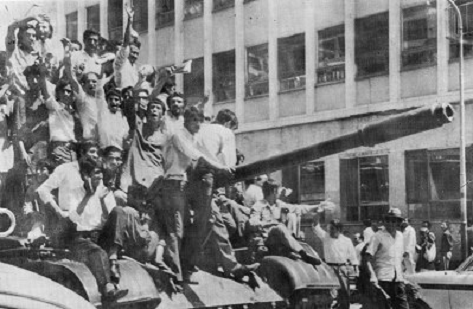
Kabul in the Republican Revolution of 1973

Wednesday, January 20, 2021

Numbers can’t tell the whole story of hate crime in Niagara (Niagara This Week)

(https://www.niagarathisweek.com/news-story/10277306-numbers-can-t-tell-the-whole-story-of-hate-crime-in-niagara/)


Numbers can’t tell the whole story of hate crime in Niagara

Community leaders want better data to track hate crimes in region

NiagaraThisWeek.com
Wednesday, January 20, 2021

Looking at the numbers, it would be easy to think Niagara doesn’t have a problem with hate crime, but local community leaders say statistics can’t tell the whole story.

According to Statistics Canada, there were nine “police-reported hate crimes” in 2019 in St. Catharines-Niagara, a number that is lower than the country’s national average. There are concerns, though, that those statistics don’t capture the scope of the issue.

“It feels low. That doesn’t feel representative of what people experience,” said Patty Krawec, an Anishnaabe woman who lives in Niagara Falls and co-hosts the Medicine for the Resistance podcast.

Saleh Waziruddin, executive member of the Niagara Region Anti-Racism Association (NRARA), said one limitation to the data is that police-reported hate crimes are a “narrow subset” of hate incidents because Statistics Canada only tracks police-reported hate crimes and not all violations of Canada’s hate laws.

Krawec said the narrow definition will exclude some people’s experiences.

“When (a hate crime) has to meet these certain criteria … you’re now excluding people who may have been targeted because of their race or because of their perceived race, but they’re not going to meet the criteria because you’ve set it up in such a way that it excludes people,” she said.

And since there is data to suggest many victims of hate crimes don’t report them, it’s likely there are more than what’s reported to police. 

“I don’t think people want to report hate crimes or even necessarily trust the police enough to go through that avenue,” said Karl Dockstader, executive director of the Niagara Regional Native Centre.

Waziruddin and Krawec said in order to understand what is actually happening in Niagara with regards to hate crime, there needs to be better data.

Waziruddin said the NRARA supports the St. Catharines Anti-Racism Advisory Committee’s demand for the Niagara Regional Police Service (NRPS) to release a breakdown of where hate crimes are occurring in the region, who is being targeted and what kind of crimes are being committed.

“It’s very important to be aware of which protected groups are being targeted for hate in Niagara,” he said.

Currently, while individuals can see a breakdown via the NRPS website on where crimes such as robberies, thefts, assaults and others occur, they can’t see that information on hate crimes. The NRPS declined to be interviewed for this article and said a Freedom of Information request would need to be filed to obtain specific data on hate crimes in the region.

The St. Catharines Anti-Racism Advisory Committee is also developing a community survey that will help members better understand racism and hate crime in the city, and Waziruddin said the NRARA will welcome that data.

“We think that will be a big step of at least one part of the region of what kind of incidents people are experiencing and how they want to report it,” he said.

Krawec said “race-based data” that tracks who’s targeted, who’s charged and who’s convicted would be more useful than simply tracking the number of hate crimes because it will show patterns of behaviour.

“Tracking (an) attitude isn’t as important as tracking the outcomes of that attitude,” she said. “The outcomes give us the patterns and the patterns tell us where we need to make change.”

But while the statistics may not capture the reality of the situation, Dockstader said he doesn’t want to see hate crimes increase either.

“By the time it gets to that point, things have broken down before that,” he said. “Where I think it starts is for non-Black, non-Indigenous and non-people of colour to identify that racism exists and look for ways to remedy racism at every level.”

Waziruddin said it will take cooperation from municipal governments and grassroots organizations to advocate for better data and safer communities.

“We do need all parts of society to come together here,” he said. “Everybody does have a role.”

STORY BEHIND THE STORY: Even though the number of reported hate crimes was low in Niagara, reporter Lindsay Smith wanted to hear from community members and leaders about whether those numbers reflected the lived experience of people in the region.

Lindsay Smith was a reporter/photographer for Niagara this Week.


Monday, January 18, 2021

Niagara residents overcoming hate with hope and unity (Niagara This Week)

(https://www.niagarathisweek.com/news-story/10276345-niagara-residents-overcoming-hate-with-hope-and-unity/) 

Hate
NEWS

Niagara residents overcoming hate with hope and unity

Niagara This Week - St. Catharines
Monday, January 18, 2021

At over six feet tall with a thick bodybuilder frame, the late Fred Bracken cut an imposing figure. Even more so when he was spoiling for a fight.

“I was attending a regional council meeting in 2017 when Mr. Bracken showed up,” recalled Mohamad Al Jumaily. “I saw this guy, he was very loud, and dressed in camo like he was in the military. He was very emotionally and physically charged up. He was trying to get me into a physical fight with him, and that was very shocking to me.”

Jumaily was attending the council meeting to speak out against the racist, anti-LGBTQ comments that a member of regional council had been posting to his personal social media accounts. Bracken, a vocal Trump supporter who had recently been arrested for getting in a fight during a protest where he held a sign reading ‘F--- MEXICO’ while shouting at passersby with a megaphone, was at the meeting to show his support for the same councillor Jumaily was there to speak against.

“I did not allow him this opportunity to get me to fight with him,” recalled Jumaily of his encounter with Bracken while they waited for the council meeting to start. “I went to security; I said look at this guy he is disturbing the peace, and that’s when he [Bracken] started calling me a terrorist.”

It was a shocking slur, but Jumaily said he was equally shocked by what happened next.

“During this verbal harassment, I went to (then regional chair Alan Caslin) and told him that this guy keeps calling me a terrorist,” recalled Jumaily. “I was told by the chairman that nothing could be done because the meeting had not officially started yet.”

The inaction in the face of such a racially charged situation is something that Jumaily said cut just as deep as the original insult of being called a terrorist.

“It was a pathetic excuse. When you look to people who are in positions of power, like the chair of the entire Niagara Region, you would expect them to embody basic aspects of leadership,” said Jumaily. “He failed to deliver on leadership when that situation unfolded right before his eyes.”

While the chair and other members of council stood by and did nothing, Jumaily recalled how much better he felt when someone finally did something.

“Former councillor Paul Grenier was the only one in the council chambers that day to call this what it was,” said Jumaily. “He called it a hate crime.”

Comparatively speaking, hate crime incidents like the one Jumaily faced, are rare in Niagara relative to larger urban areas around Toronto. But according to Marrika Sanders, it’s no less important to show support for anti-racism initiatives in Niagara than it is in big cities.

When George Floyd was murdered earlier this year at the hands of a Minneapolis police officer, it sparked a wave of Black Lives Matters protests across the globe, including in unlikely places, like Fort Erie, where only about one per cent of the population is Black.

“Racism happens here too, and people need to be made aware of it and I wanted those bigger cities and places to know that there are small towns who support them,” said Sanders, who organized a BLM protest in her hometown of Fort Erie.

While motivated that day by the George Floyd incident, Sanders had her own reasons for wanting to support BLM and other anti-racism initiatives in Niagara.

“My cousin experienced police brutality as an adolescent,” recalled Sanders. “My mom and I saw it first hand, it was heartbreaking, but there was nothing we could do because the police are the authority. They smacked her down and pushed her forcefully into the cop car.”

Sanders was 18 years old at the time, and it was the first time she had witnessed racism with her own eyes. She said it shook her confidence in police and the way they interact with people that look like her.

“I don’t put all police officers in the same category, but I do recognize the need for change.”

Gaining the trust and support of racialized communities in Niagara is no small task for police, and according to Saleh Waziruddin from the Niagara Region Anti-Racism Association, it starts with more transparency.

“We can look up all the crimes reported to police in Niagara, except for hate crimes, it’s the only one not there,” said Waziruddin of his group’s ongoing efforts to collect data on hate crimes.

At a time when building relationships with Niagara’s racialized communities is more important than ever, Waziruddin said having an open dialogue about hate crimes is a strong first step.

James Culic is an Ottawa-expat, reporting the news around Niagara’s southern tier. He also writes a weekly opinion column which people seem to love to hate-read. Follow him on Twitter and on Facebook.


Sunday, December 20, 2020

Haldimand Police Board Clarification and Apology (Official Statement)

(https://www.haldimandcounty.ca/wp-content/uploads/2020/12/Board-Apology-Final.pdf)

Haldimand Police Services Board 

(The Board) 

December 02, 2020

Clarification and Apology:

On September 23, 2020 the Haldimand Police Services Board released a position paper directed towards the Ontario Provincial Police. The intent of the position paper was to express concerns received by citizens of Caledonia about the police response to lawless acts committed by the Land Defenders on August 05, 2020. The concerns raised were directed to the OPP and the Board’s position was that in Canada there should be only one law applicable to all and enforced in an unbiased, non-prejudicial manner and that it should apply equally to all Canadians. The Board also requested that the OPP policy “A Framework for Police Preparedness for Indigenous Critical Incidents” needed to be reviewed and revised as recommended by Justice, Mr. Sidney Linden. This recommendation was made based on the fact the policy obviously wasn’t working and a review was required. 

Unfortunately, in one paragraph, the Board chose to use the words Terrorism and Terrorists. The Board acknowledges that these words should not have been used. The Board also acknowledges that Terrorism and Terrorists can only be legally determined by the courts. There is a process in Canadian law where permission must be granted by the Attorney General in order to initiate any allegation of Terrorism. In addition to this, Terrorism cannot be legally determined until there is a finding of guilt at a trial conducted before a Judge in a court of competent jurisdiction. 

The Board apologizes for any upset this may have caused to any person.


Thursday, December 17, 2020

Speech to Niagara Regional Council on Need for Separate Anti-Racism, 2SLGBTQQII+ Committees vs Diversity Committee

 I'm Saleh Waziruddin from the Niagara Region Anti-Racism Association (NRARA), thanks for allowing us to speak this evening. I am also chair of the City of St. Catharines anti-racism committee and while I'll be drawing on that experience I am here tonight for NRARA.

There need to be separate committees for anti-racism and LGBTQ2S+ from the beginning, right from the start and not somewhere down the road, they cannot be combined into one committee or operated as subcommittees of a broader committee.

To start off, it's important to point out diversity and inclusion are not anti-racism. To show you what I mean, there is a local elected official who correctly pointed out they are the first Polish Canadian to be elected to their position. That may be diversity, that may be inclusion, but that is definitely not anti-racism.

To have effective anti-racism and LGBTQ2S+ committees you at least need people with lived experience who have engaged in these issues. Diversity and inclusion are much broader issues and so it will be difficult to get a group of people who have lived experiences engaging in all the different issues at once. It's tough enough to do anti-racism work, to have to explain it to a majority of committee members who don't have the experiences is an extra obstacle.

The table you have from staff of what other municipalities are doing is a bit flat: it's missing some of the changing trends. There was a trend earlier to fold up anti-racism committees into broader diversity committees, which posed the danger of watering down anti-racism work. This trend is being reversed, municipalities are now hanging on to separate anti-racism committees or establishing them.


In St. Catharines there was originally going to be one diversity and inclusion committee but after campaigning it was agreed to set up separate anti-racism and LGBTQ2S+ committees. Fears that there would not be enough people interested were unfounded and many of those who opposed separate committees have come around and agree it was the right decision to have separate ones.


Briefly recently the LGTBQ2S+ committee had several vacancies at once and it was proposed to them to merge into a broader diversity committee, but they refused and maintained their committee needed to be separate. They were able to easily fill the vacancies as they had an enormous interest in applications. I am sure there is an enormous interested across the Region as well, now is the time to harness it. It's not unrealistic or unmanageable.


In Niagara Falls also staff initially wanted to have one diversity committee but have set up a separate anti-racism committee.


The Region should be on the good side of the trend, it's important that anti-racism and LGBTQ2S+ issues be not mixed with the important and broader issues of diversity, equity, and inclusion, and be run as separate committees if they are going to have any chance to deliver results for you and our residents. Please amend the motion tonight to create separate anti-racism and LGBTQ2S+ committees from the beginning of this process.


I'll hand off now to my co-delegate Erika Smith.

Thursday, December 3, 2020

Speech at A Progressive Niagara: Why We Engage in 2020

Speech Representing Niagara Region Anti-Racism Association at A Progressive Niagara: Why We Engage in 2020


I'm Saleh Waziruddin from the Niagara Region Anti-Racism Association


Though I'm a Canadian I got my start in activism while I was living in the USA, in Pittsburgh Pennsylvania.

I was working there as a Canadian and so wasn't a US citizen so was very careful not to get publicly involved because I was afraid it would affect my work visa.

Then 9/11 happened – some of you may be too young to remember what a change that brought about. Among many things there was a big rise in open racism that went hand in hand in support of war, similar to the rise in open racism we've seen over the last few years.

There were many civil rights and anti-racism organizations in Pittsburgh but almost each month after 9/11 one person had been arrested as a terrorist in Pittsburgh without any evidence. These were people whose lives were being destroyed but their whole communities were also being cowed into silence and fear. I reached out to them to help but they were too scared, until the 3rd person who had no choice but to accept help from me as he had no one else.

But I still didn't want to be public. We organized a press conference and I refused to give my name to the media. A journalist laughed at me saying how can I give a press conference but not give my name.

I realized at that moment that he was right, no one else was helping these people who were arrested and so I had to do it, and if I was going to do it I had do it all the way and do it right, and be public.

I didn't do it alone, we approached all the existing organizations and made a big coalition that got the person freed after a year-long campaign and that stopped the arrests in Pittsburgh of people made out to be terrorists. It was a victory for the BIPOC communities and for everyone, but it took stepping forward where no one else was.


Fast forward to you in Niagara in 2020. I have some good news for you that doesn't sound very good: we are behind in Niagara. We are behind many of the places right next door.

With the police, they are still clinging to racial profiling, which they call street checks or collection of identifying information. This is disgusting and was one of the first things other police forces said they would stop doing. Toronto and many other cities across Ontario and Canada, and now the RCMP, are adopting body cameras, not because some study says they work or because the price is right, but because they decided they would listen to the communities that are asking for them, Do we in Niagara deserve any less?

It's not just the police but we are behind on the Opioid crisis and in many other areas.


But the other side of this is that there is a big hunger for change. Not just among the people in general but even those in power, governments including elected officials at all levels, business, institutions are reaching out looking for ways how they can be part of the solution.


You are in the right place at the right time!


Remember that we're living in Harriet Tubman's home town, a woman who took initiative to fix what was wrong without worrying about limited by conventions or obstacles or what was acceptable to those who had power and wealth. Today in Niagara we are not too small or too far removed from what's happening in the world to be pioneers and show the way forward.


So if you see something wrong that needs to be fixed, and no one seems to be doing anything about it, now is a great time to step forward all the way and to gather all the support that is around you and take it on, make a difference for your community. If you're not sure how to take the first step then reach out to one of us or another activist or leader in your community for advice.


And if you don't see anything you can do that no one else isn't already doing, then the answer is pretty simple: join in with those who are already working to break down inequality and patriarchy and racism and the power of the wealthy and add your full voice, one of the pieces we need to make our efforts stronger.


Your community is waiting for you to add your missing voice.


Wednesday, October 28, 2020

Bylsma not backing down on ‘all lives matter’ statement

Bylsma not backing down on ‘all lives matter’ statement

West Lincoln mayor violated township council’s code of conduct

JULIE JOCSAK TORSTAR FILE PHOTO
Protesters gathered at West Lincoln township hall in June following comments from Mayor David Bylsma they described as homophobic and racist. Township council voted to reprimand the mayor and order him to undergo sensitivity training.

Despite being reprimanded by the council he leads and being ordered to undergo sensitivity training, West Lincoln Mayor Dave Bylsma said he continues to believe in statements he made in June, described by complainants as “racist, homophobic and disrespectful of citizens who are not of his ilk.”


“I’m disappointed,” Bylsma said in an interview Tuesday, the morning after township councillors voted to implement most of the recommendations of integrity commissioner Daria Peregoudova from Aird & Berlis LLP.


Peregoudova’s investigation determined the mayor contravened three sections of the township’s code of conduct.


As a result of complaints about comments Bylsma made during a June 11 radio interview with CKTB 610, the integrity commissioner determined the mayor contravened a section of the code that calls for councillors to show respect and equal treatment; as well as a section that prevents harassment or discrimination.


Peregoudova also determined Bylsma contravened his duty to serve constituents in a conscientious and diligent manner by failing to communicate having received a request from Pride Niagara to raise the organization’s flag at township hall during Pride Week.


Although Bylsma was given 90 days to complete sensitivity training, he said he has already completed half that training as a result of Niagara Region’s inclusive municipalities initiative.


Still, he stood by the comments he made that led to the complaints against him in the first place.

“I mean, I thought I understood all lives matter to be an inclusive broad term, and I guess it has a connotation that I don’t understand anymore,” he said. “I’ll leave it at that.”


That statement, often used to criticize the Black Lives Matter movement, has itself been criticized for failing to recognize systemic racism and implying that all lives are equally at risk when statistics show they are not.


But Bylsma said: “If I truly believe that all lives matter, there’s no issue is there?”


“If you’re alive, you matter,” he added. “You can’t get much simpler than that.”


When concerns about failing to recognize systemic racism were pointed out to him, Bylsma said “if all lives matter, wouldn’t that matter to me as well?”


“I’m telling you that’s the truth — all lives matter,” he added. “If that’s now considered pejora

tive speech or loaded speech, then I guess the media, they’ve captured something.”


Township councillors also voted to carry on with developing a new flag-raising policy, to post a previous apology from the mayor on West Lincoln’s website and social media sites, and subject the mayor to exercising improved diligence with respect to the management of electronic communications and requests.


Ward 3 Smithville Coun. Cheryl Ganann, who chaired Monday night’s meeting, said only one recommendation from the integrity commissioner was not implemented; It called for sensitivity training for all members of council.


“If, as a council, we opted to do it at some time in the future, we didn’t want it connected to this decision,” Ganann said. “No one was objecting to having such training, but we didn’t want that connected to the integrity commissioner report because those things were directed at Mayor Bylsma.”


“My hope is coming out of this is that this will be the end of that, and we can just get back to being West Lincoln. We have a wonderful community,” she said.


Ward 2 Gainsborough Coun. Harold Jonker was alone in opposing the motion to implement the integrity commissioner’s recommendations against Bylsma.


“I don’t support what council did. I actually agree with the mayor that all lives matter,” he said.

Jonker called it “mind-boggling” to say Bylsma needs sensitivity training.


“He’s a very caring person … He’s a man that cares about his community, cares about his family, cares about where things are going.”


Although Pride Niagara chair Enzo Dedivitiis called Bylsma’s response to council’s decision “really unfortunate,” he said he hasn’t given up hope that the mayor may yet understand the concerns.


“People make mistakes and part of evolving is learning. As long as we together are learning and changing in a positive direction, that’s what being an ally is.”


Saleh Waziruddin from the Niagara Region Anti Racism Coalition said he, too, was pleased with council’s decision.


“Everybody can benefit from education,” he said. “We definitely hope the mayor benefits from it, but that other people are also open to undergoing the same type of training.”